| Status: | Active, open to new members |
| Facilitator: | |
| When: | Monthly on Monday mornings 10:00 am-11:30 am 2nd and 4th Mondays in the month |
| Venue: | Member's home |
Page last updated:

Are there great works of literature that you feel you should read and might get round to one day, but never seem to find the time? That was the main reason for starting our U3A group 'Exploring Literature'.
A well-established group, we have read and discussed a wide variety of literature, all chosen by members of the group, ranging from Homer and Virgil to Conrad, Joyce, Beckett, Jane Austen and Mark Twain.
We meet in person at a member's home and also by Zoom - if you have a terrible cold , you can still join the meeting from the comfort of your own home!
Next meetings
As usual we won't be meeting during the Wigtown Book Festival so our next meetings will be on 14th September, and 12th October . We have embarked on reading Franz Kafka's Short Stories : quite a challenge, as its not at all clear what the writer intended them to represent and to mean. Many of the stories are really quite unsettling, and are certainly open to a range of interpretations. Being in a group definitely helps us explore those possible meanings together.
Our next book has a more straightforward narrative, and recently topped a couple of polls as the best novel of all time : 'Middlemarch', by George Eliot. We can look forward to reading a great classic, to take us into the winter months; subsiding into a favourite reading spot with a hot drink, another good book and a sigh of satisfaction seems most appealing.
The current book
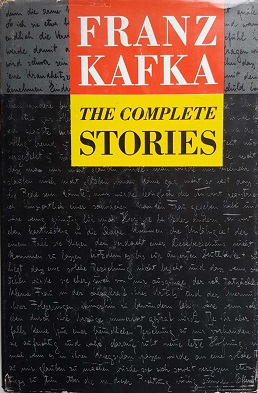
The Complete Stories of Franz KafkaThe collection includes all the works published during Kafka's lifetime, with the exception of The Stoker which is usually incorporated as the first chapter of his unfinished novel Amerika. Some of the stories included in the book are fragmented or in various states of incompletion.
Source: Wikipedia
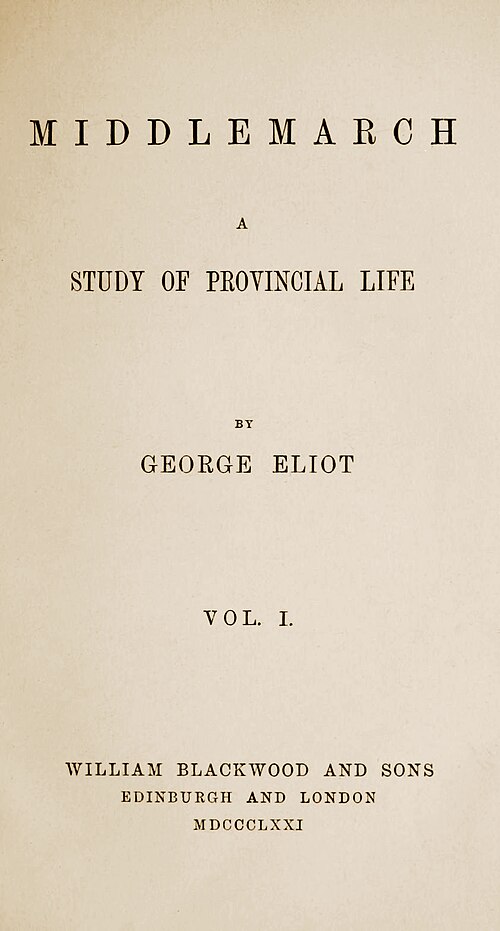
Middlemarch, A Study of Provincial Life is a novel by George Eliot. Set in Middlemarch, a fictional English Midlands town, from 1829 to 1832, it follows distinct, intersecting stories with many characters. Issues include the status of women, the nature of marriage, idealism, self-interest, religion, hypocrisy, political reform, and education. Leavened with comic elements, Middlemarch approaches significant historical events in a realist mode: the Reform Act 1832, early railways, and the accession of King William IV. It looks at medicine of the time and reactionary views in a settled community facing unwelcome change. Eliot began writing the two pieces that formed the novel in 1869–1870 and completed it in 1871. Initial reviews were mixed, but it is now seen widely as her best work and one of the great English novels
Source: Wikipedia
Previous books
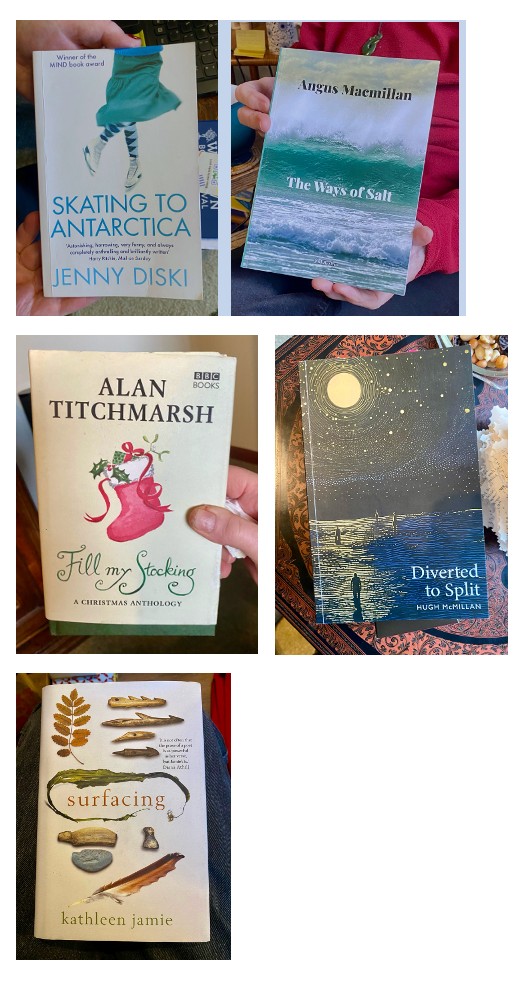
December 2024 - Personal favourites
On Monday members met at Anne's house. Brian zoomed in from Glasgow. No Iliad this time to read aloud, but personal favourites. Not necessarily any connection to Christmas, although there were a few. Brian and David started with a dialogue, based on happenings in Bethlehem's stable and Heather chose a funny Christmas-play-story from Alan Titchmarsh.
- 'The Prime of Miss Jean Brodie' by Muriel Spark.
- 'Mrs Dalloway’ by Virginia Woolf.
- ‘The Task’ by William Cowper.
- 'The Great Gatsby' by F. Scott Fitzgerald
- Homer's 'Iliad', as translated by Emily Wilson
- 'The Sorrows of Young Wurther' by Goethe
- Stories by Anton Chekhov, including 'The Lady with the Little Dog‘ and others.
- ‘Dr Zhivago’ by Boris Pasternak – in translation of course!
- ‘The Old Wives’ Tale’ by Arnold Bennet.
- Homer's 'Odyssey', in the new translation by Emily Wilson.